Chimney Repair & Masonry Restoration in Troy, New York
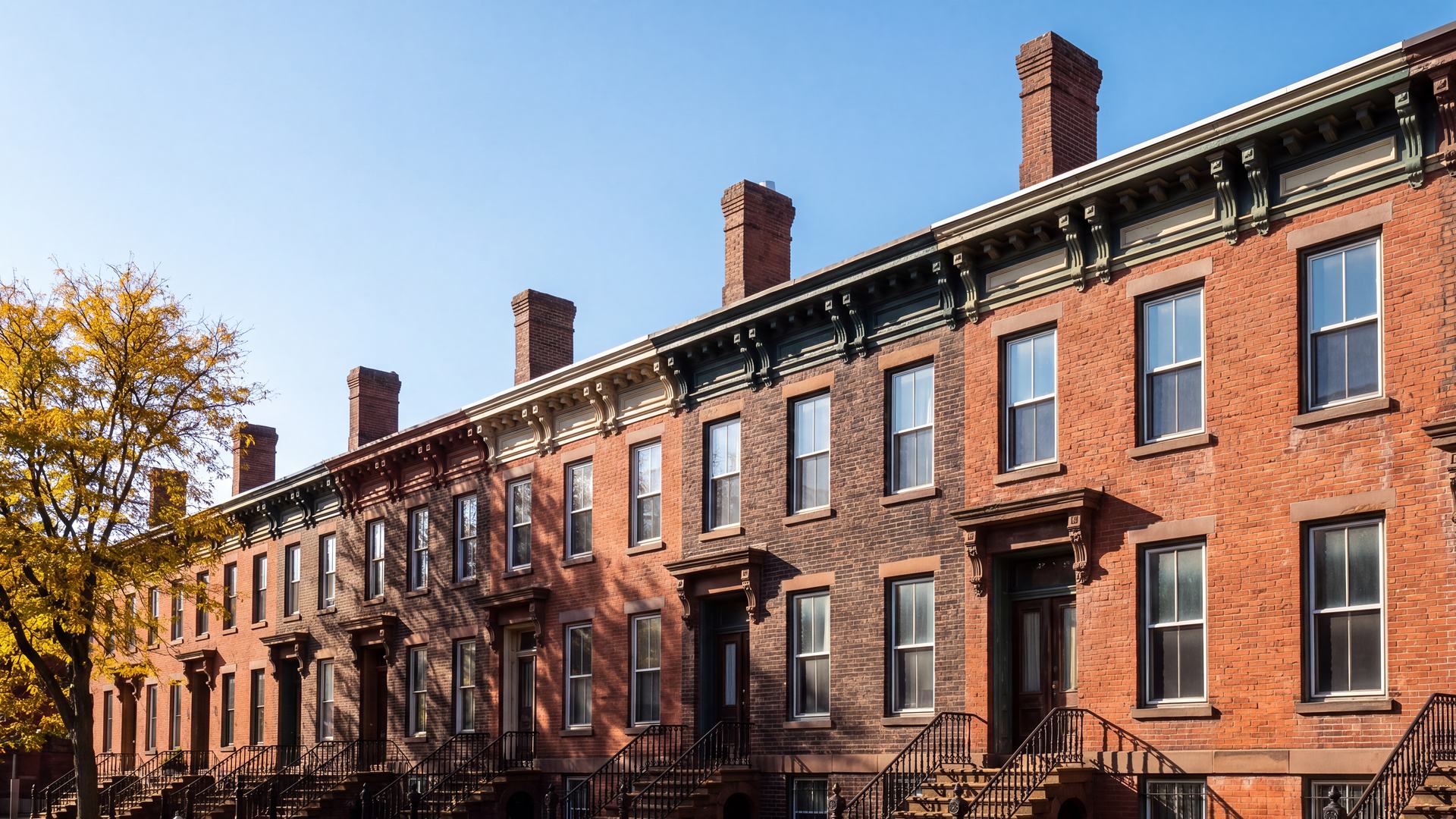
Troy has one of the finest collections of 19th-century architecture in America — the Collar City's brownstones and brick rowhouses have crowned downtown, Washington Park, and Lansingburgh since the iron-and-shirt-collar money built them. Their chimneys are now 120 to 170 years old, and they were built for coal fires and lime mortar, not for modern gas appliances and a century-and-a-half of Hudson Valley freeze-thaw. Keeping them standing, sealed, and safe is what chimney repair in Troy comes down to.
Rowhouse chimneys have their own physics: shared party walls, multiple flues in one stack, corbelled brick, and parapet exposure that takes weather from every side. When one fails it sheds brick onto a neighbor's roof or backdrafts into two buildings. The work starts with a camera inspection from crown to thimble, then repointing with mortar matched to the era and relining so old masonry can safely vent modern heating equipment.
free quotes, no obligation; requests go to an independent local contractor.
Free quote
What 150 Winters Do to a Collar City Chimney
Freeze-thaw is the patient destroyer of Troy masonry. Capital Region winters cycle above and below freezing dozens of times a season; every cycle drives water a little deeper into soft historic brick and lime mortar joints. The visible symptoms climb the stack: spalled brick faces near the top, mortar joints turned to sand, a crown cracked and letting water straight into the flue cavity. On Troy's tall rowhouse stacks the damage concentrates above the roofline where nobody looks — which is why so many Troy chimney problems first come to light as bricks found in the gutter.
The other Troy epidemic is unlined or clay-lined flues venting appliances they were never designed for. A coal-era flue is oversized and often unlined; hook a modern high-efficiency gas boiler to it and the cool, wet exhaust condenses inside the masonry, dissolving mortar from within and pushing sulfates through parlor walls as staining. The fix is a properly sized stainless liner — a day's work that stops the decay and removes a real carbon monoxide risk. If your Troy home still vents heat through original masonry, that liner is the single most important thing on this page.
See Troy, NY on Google Maps — quote requests from across the area go to independent local contractors.
What Drives Chimney Repair Costs in Troy
Two Troy chimneys with the same cracked crown can draw very different quotes, because height, access, shared walls, and material matching set most of the price. The numbers sit in the Capital Region pricing guide; these Troy conditions move a quote within those ranges.
- Height and staging: tall rowhouse stacks often need roof brackets or staging, a setup cost even small repairs carry.
- Party walls: a shared stack means two roofs to protect, flashing on both sides, access to arrange with the neighbor, and every flue documented for the unit it serves.
- Several flues in one stack: each needs its own camera pass, and each liner is priced separately.
- Era-matched materials: salvaged brick, lime mortar tinted and tooled to the original joints, and brownstone work cost more than commodity materials.
- Historic review: an exterior change inside a local district needs a certificate of appropriateness from the HDLRC before work starts, which adds paperwork and calendar time.
- Reviving a cold fireplace: a long-unused parlor fireplace needs its firebox, damper, smoke chamber, and flue checked first, and fireplace and firebox repair calls for refractory mortar, not the lime mortar used outside.
Permits and Historic Review for Chimney Work in Troy
Building permits in Troy come from Code Enforcement. City Code section 141-4 requires a permit from the Director of Code Enforcement but exempts painting, decorating, and ordinary repairs that are not structural in nature. Neither the city's permit page, which lists repairs and roofing, nor the application mentions chimneys, so whether a rebuilt stack, a new liner, or a recast crown counts as structural is for Code Enforcement to say before work starts; the contractor normally pulls any permit. Under the state's permit rule, 19 NYCRR 1203.3, exempt work must still meet the Uniform Code.
Historic review is a separate track. The Historic District and Landmarks Review Commission (HDLRC) works with owners whose plans will affect the exterior appearance of their buildings, and City Code section 47-5A bars any change to an exterior architectural feature in the district from starting without its certificate of appropriateness. Chimneys are not named, but a removed or rebuilt stack, replacement brick, or a new mortar color can count, so ask the HDLRC early; the city's 2015 Historic District Map shows the boundaries. The Central Lansingburgh Historic District's 2023 National Register approval is not a local designation, so check the map there too.
Brick, Brownstone and Stonework Repair in Troy
Troy's masonry is old even by Capital Region standards: 53.5 percent of the city's housing units predate 1940, and the Central Troy Historic District counts 659 contributing buildings dating from 1787 to about 1940 (sources on the Capital Region freeze-thaw and housing data page). Washington Park, a privately owned park established in 1840, is ringed by brownstone rowhouses, and Lansingburgh traces to a farm survey in 1771. Brick and stonework repair here means soft brick, lime mortar, and stone, where a mismatch shows from the sidewalk.
Brick repair on a Troy chimney means cutting out spalled units and replacing them with brick matched for size, color range, and texture, or relaying original brick that still holds its fired skin, blended across each face rather than patched in as a block. When whole faces above the roofline have failed, a partial chimney rebuild down to sound courses is the sounder scope, with corbels and wash courses photographed and measured first so they can be reproduced.
The National Park Service's Preservation Brief 2 explains why mortar choice decides the fate of old brick: mortar stronger in compressive strength than the masonry units will not give, so stresses are relieved through the units themselves, and mortar that keeps moisture vapor from migrating out of the wall damages the masonry. Hard Portland-heavy mortar on soft historic brick does both, so repointing with compatible lime mortar matters more than the color match. Brief 2 expects a good repointing job to last at least 30 years, preferably 50 to 100, and it says the cause of the deterioration should be dealt with first; on a chimney that may take a recast crown with a drip edge and a bond break and caps on open flues.
Brownstone and other stone deserve their own line in the scope. If the job reaches stone, such as brownstone trim or a coping near the chimney, ask which pieces are failing, whether replacement stone or repair of the existing stone is proposed, how color and texture will be matched, and how the surrounding mortar will be tested. Brief 2's rule holds for stone too: the joint must be the weaker, more permeable part. In a district, a visible change to stone trim is an exterior change for the HDLRC, so file the written stone scope and photographs with the application. Matching the material is the rule behind chimney and masonry repair across the Capital Region; Troy's brownstone blocks concentrate it.
Chimney Services Available in Troy
Every chimney and fireplace service on this site is available to Troy homeowners. Each page explains the work, the signs that call for it and typical pricing:
See the full pricing guide for typical ranges.
Troy FAQs
Bricks are flaking off my Troy rowhouse chimney. How urgent is it?
Spalling means water is inside the brick and every freeze pushes more face off. Above a street or a neighbor's roof it's a falling-debris risk, and the stack loses structural section each winter. It's worth an inspection this season, not next — early repointing and a crown fix cost a fraction of a rebuild.
How is a shared or party-wall chimney in Troy repaired?
With both owners in the loop. Rowhouse stacks often serve two properties with multiple flues, so every flue should be scoped and documented for which unit it serves, and access coordinated with the neighbor when work touches the shared stack. Shared stacks are routine in Washington Park and Lansingburgh.
Do I need a permit or historic approval for chimney repair in Troy?
Possibly both. Code Enforcement exempts ordinary repairs that are not structural, but its permit materials do not mention chimneys, so ask before a rebuild, liner, or crown job is scheduled; the contractor normally handles the application. Inside a local historic district, changing an exterior feature also needs an HDLRC certificate of appropriateness, a separate approval.
When is the best time of year to repoint a Troy chimney?
When wall temperatures stay between 40 and 95 degrees F, the range Preservation Brief 2 gives to keep mortar from freezing or drying too fast; in the Capital Region that usually means May through October. Brief 2 also wants shade in hot weather, burlap over fresh joints for the first three days, and no antifreeze. Winter work means warmed sand and water and joints protected from freezing, which adds labor.
Get Your Free Troy Quote
Free quote