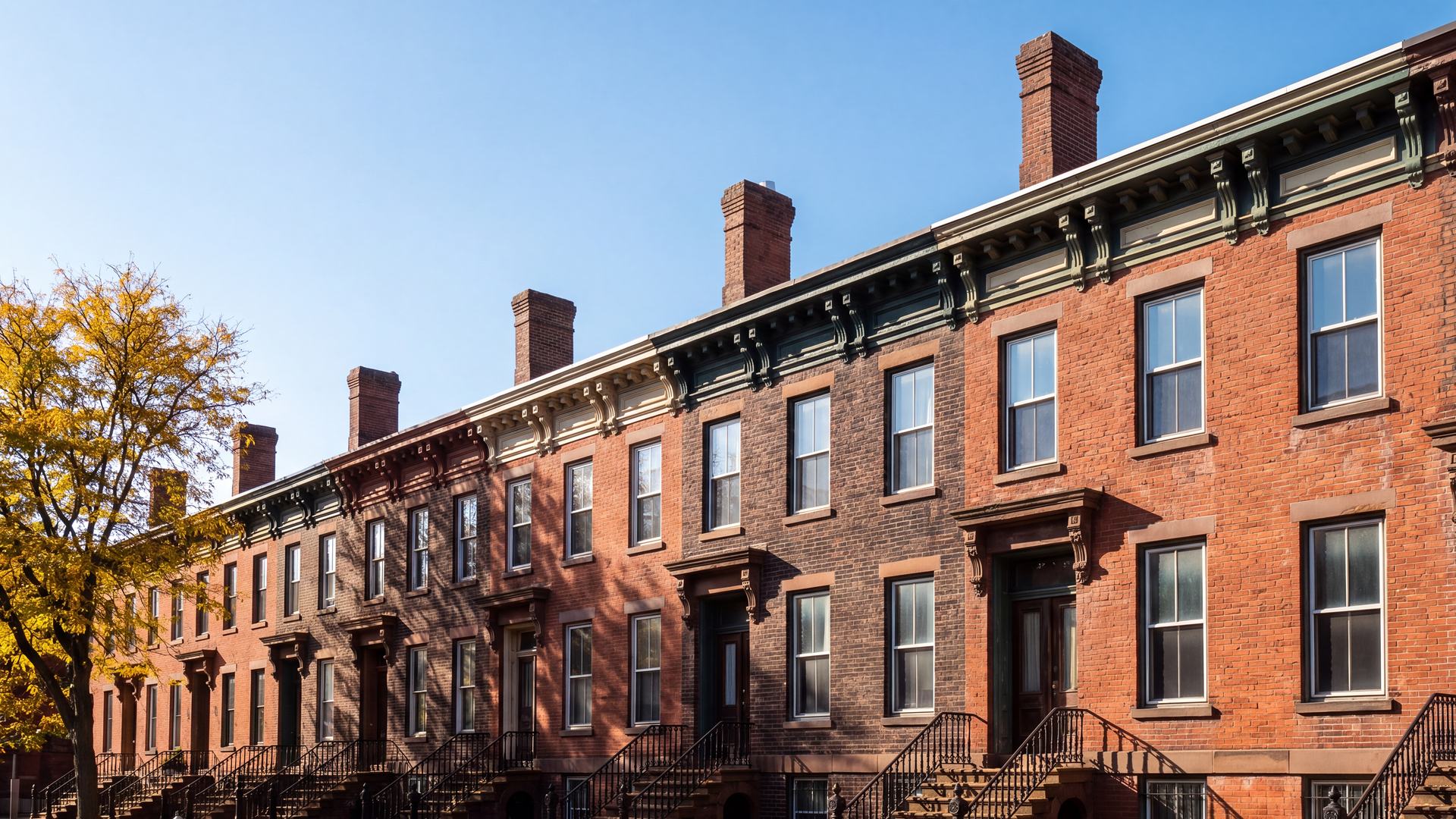
Chimney Repair & Masonry Restoration in Latham, New York
Latham is a hamlet in the Town of Colonie whose history runs along two old roads: the Old Loudon Road, built in 1755 during the French and Indian War, and the Troy and Schenectady Turnpike, built in 1802, which intersected it. The name comes from Latham's Corners, named after hotel owner William G. Latham. That history says little about the chimney on any one house, though, and chimney restoration in Latham starts by finding out what is actually there: a brick or stone stack with clay flue tiles, or a factory-built fireplace with a metal chimney, each with its own way of failing.
Whatever the age of the house, a Latham chimney faces Capital Region weather. Albany's climate runs about 6,357 heating degree days a year, so flues carry heat through a long season, and freeze-thaw works at any crack that holds water. The failures are familiar: crowns crack, flashing separates where roof meets brick, mortar joints go sandy, clay liners crack or shift, and metal parts rust. Good chimney repair in Latham follows the same order as Albany-area chimney restoration: stop the water first, then repair what it damaged, then make the flue safe for whatever it vents.
free quotes, no obligation; requests go to an independent local contractor.
Free quote
Know Which Chimney You Have Before Restoring It
Construction comes first. A masonry chimney is brick or stone, with clay flue tiles or a metal liner inside and, if it serves a fireplace, a firebox lined with firebrick at its base. A factory-built fireplace is made up of a firebox enclosed within a steel cabinet and a steel chimney; where that chimney rises through a framed chase, a metal pan called the chase cover closes the top. The model code (2021 IRC) requires factory-built fireplaces to be listed and labeled, tested to UL 127, and installed according to their listing, so the listing label is the first thing to find before anyone quotes repairs.
The difference decides how repairs work. Factory-built chimneys and fireplaces come from specific manufacturers, their parts are not interchangeable from one manufacturer to another, and installation instructions usually call for parts supplied by the manufacturer when repair is needed, so a rusted top or damaged chimney section is a parts question before it is a labor question. CSIA adds that it is not uncommon for listed fireplaces, inserts and chimneys to be refitted with aftermarket parts not necessarily in accordance with the original listing, and that deposits in a factory-built fireplace are acidic enough to corrode its components, which is why it should be swept whenever appreciable buildup occurs. On a masonry chimney the work is masonry: crown repair or recasting, repointing, flashing and, where clay tiles have failed, a stainless liner.
A few more checks complete the picture. Start with what vents into each flue now, through which thimble, and what will after any planned furnace, boiler or water heater change, since a liner is sized to the appliance it serves. Then look at how the top is finished: a sand-and-mortar wash, or a cast crown with an expansion joint, which CSIA calls an ideal long-lasting replacement for those washes and says should project two inches beyond every side; CSIA's inspection procedure adds that NFPA 211 requires a bond break where the top flue tile passes through the crown. Note what earlier repairs left behind, from caulk smeared over flashing to dense gray cement patches on softer brick. Finally, look for water already showing inside, as stains beside the chimney, rust on the damper or a wet firebox floor after storms; on a factory-built system, an industry training handout warns that once water gets into the chase, damage to the structural framing is to be expected.
See Latham, NY on Google Maps — quote requests from across the area go to independent local contractors.
What Drives Chimney Restoration Costs in Latham
A Latham quote depends on what the inspection finds, not on the street the house sits on. Typical price ranges by repair are published; these findings decide where a given chimney lands within them. Ask for photographs of each problem with the quote, because a scope you can see is a scope you can compare.
- Construction type. Masonry is priced by courses, joints and crowns; factory-built repairs depend on listed parts made for that model and on whether those parts are still available.
- How long water has been getting in. A crown or flashing failure caught early is a contained repair; years of it can mean relaying spalled top courses or a partial rebuild above the roofline.
- The liner and what it serves. Cracked or shifted clay tiles behind a working appliance usually mean a full-height stainless liner sized to that appliance.
- The fireplace below. Creosote buildup, eroded firebrick joints, an unparged smoke chamber or a seized damper add sweeping and firebox and smoke chamber repair to the scope.
- Roof access and roof age. Pitch and height set how much staging the job needs, and worn shingles can make it smarter to time new step and counter flashing with a reroof.
- Earlier repairs. Hard cement patches, layered caulk and film-forming coatings over brick often have to be cut out or removed before the real repair goes on.
Permits and Historic Review for Chimney Work in Latham
Latham is a hamlet of the Town of Colonie, so permits follow the same rules as chimney work elsewhere in Colonie: the town's Building Department issues them under the Colonie Town Code. Section 62-14A of that code requires a building permit for work that must conform to New York's Uniform Code, and its examples include "the installation of a solid-fuel-burning heating appliance, chimney or flue in any dwelling unit." Adding a wood stove, building a chimney or installing a flue in a Latham house is permit work by those words.
Colonie's repair exemption has limits. Section 62-14B(12) covers repairs only if they do not involve removing load-bearing components, changing required egress, altering or replacing a building system, or taking fire protection out of service. The state rule behind local codes (19 NYCRR 1203.3) leaves each program to choose which categories of work to exempt, which is why Colonie's list, not a rule of thumb from somewhere else, governs a Latham job. Describe the specific work to the Building Department before it starts; whoever takes the job normally handles the permit.
For historic questions the same town code applies, and Colonie's includes a chapter on the preservation of historic places (Chapter 118). If a Latham house carries a State or National Register listing, raise it at the start, before a rebuild or a new crown changes how the chimney looks.
Chimney Services Available in Latham
Every chimney and fireplace service on this site is available to Latham homeowners. Each page explains the work, the signs that call for it and typical pricing:
See the full pricing guide for typical ranges.
Latham FAQs
Who issues permits for chimney work in Latham?
The Town of Colonie's Building Department, since Latham is a hamlet within the town; the Colonie code names the Building Department Manager as the official who issues building permits. Installing a solid-fuel heating appliance, a chimney or a flue takes one under section 62-14A. For repairs, describe the job and ask before work begins.
How can I tell whether my Latham fireplace is masonry or factory-built?
Look at the firebox and the roof. A masonry fireplace has a firebox lined with firebrick and a brick or stone chimney above it. A factory-built unit has a firebox inside a steel cabinet and a steel chimney, which may rise through a framed chase capped with a metal chase cover, and it should carry a listing label because the model code requires factory-built fireplaces to be listed and labeled. If it is still unclear, an inspection settles it in one visit.
I'm buying a house in Latham. What chimney inspection should I ask for?
A Level 2. CSIA's procedure calls for one when a property is being sold, and it adds accessible attics, crawl spaces and basements to the Level 1 scope, along with the video scan of the flue that CSIA's Level 2 procedure requires. If it suggests a hidden hazard that cannot be evaluated without opening concealed areas, a Level 3 inspection is recommended. Chimney inspection and sweeping covers what each level includes.
What does chimney restoration cover on a Latham house?
Everything it takes to return the chimney to a sound, dry, safely venting condition, in order: stopping water at the crown, cap and flashing, which is the core of chimney leak repair; repointing or relaying failed masonry; then lining the flue for what it vents. On a factory-built system, restoration means listed replacement parts rather than masonry. Ask for each item to be priced separately so quotes can be compared line by line.
Get Your Free Latham Quote
Free quote