Chimney Repair & Masonry Restoration in Guilderland, New York
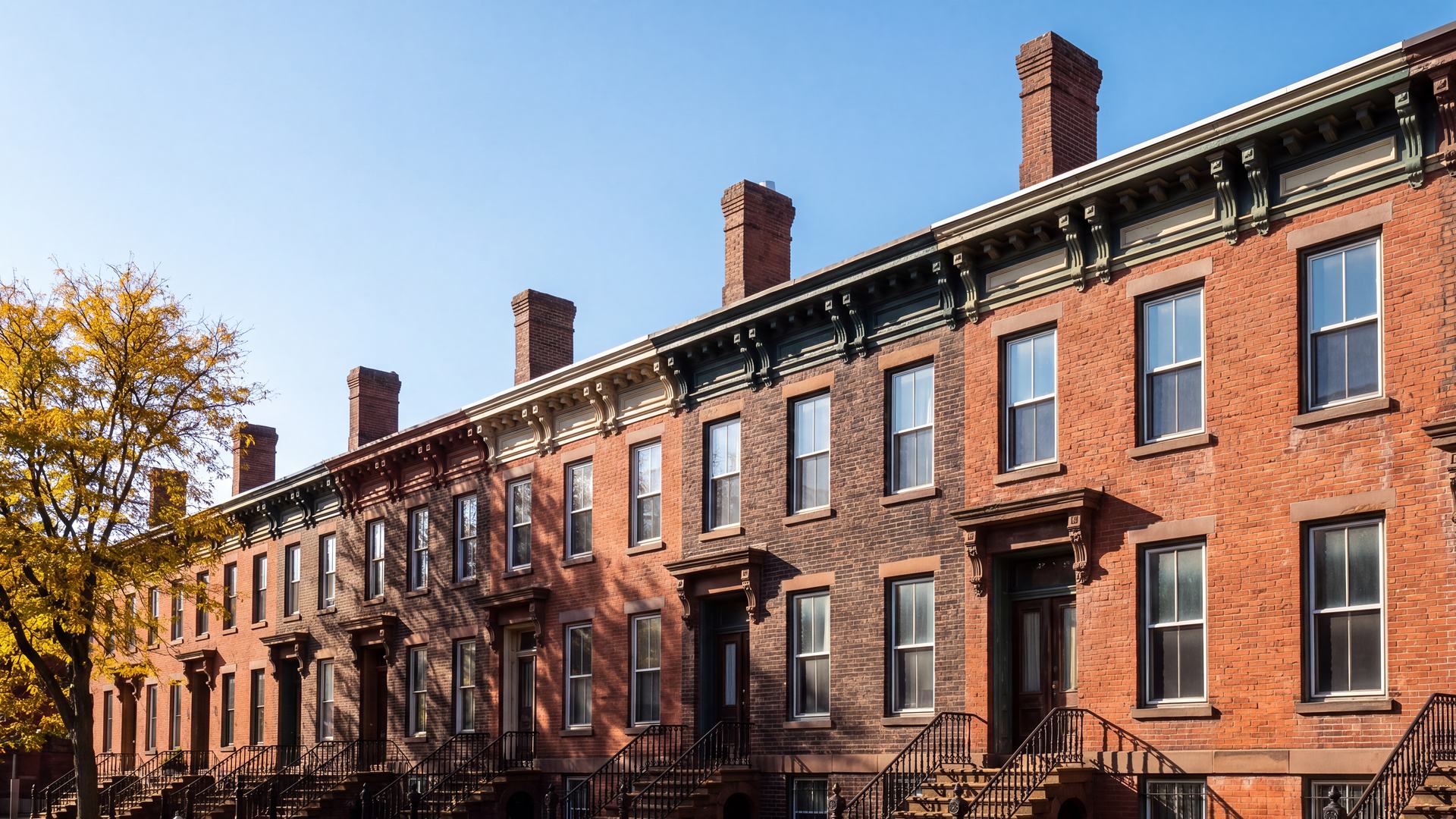
Guilderland stretches from McKownville at the Albany line out Western Avenue through Westmere to Guilderland Center and Altamont's edge — and its chimneys span a century of building styles along the way. McKownville's early-1900s homes carry prewar masonry with lime mortar and aging clay flues; the big residential waves of the 1960s through 1990s left ranch and colonial chimneys now hitting the ages where crowns, flashing, and liners come due. All of it is repairable, with the fix matched to the era.
Guilderland homes also sit more exposed than the city blocks downtown — larger lots, more wind, weather coming across the Pine Bush and the Helderberg escarpment beyond. Wind-driven rain finds every weakness in a chimney's armor: hairline crown cracks, thin mortar joints, caps missing or undersized. Most chimney repairs here start as water entry that went unnoticed for years.
free quotes, no obligation; requests go to an independent local contractor.
Free quote
A Century of Styles, One Freeze-Thaw Climate
The through-line in Guilderland chimney work is water management in a climate that freezes hard and often; Albany's 1991-2020 weather normals work out to roughly 95 days a year that cross the freezing mark, as the Capital Region freeze-thaw statistics show. On the 1960s–80s streets off Carman Road and Western Ave, the typical case is a crown that has been quietly cracked for a decade: winter melt soaks in, freezes, and jacks the top courses apart until the homeowner notices the chimney looks 'crooked' above the roofline. Rebuilt top courses, a proper cast crown with a drip edge, and a stainless cap stop the cycle — and cost far less before the damage reaches the flue.
McKownville and the older hamlet cores need a gentler hand. Lime-mortar masonry must be repointed with compatible mortar — hard modern Portland mix traps moisture and spalls the surrounding historic brick, a mistake that later has to be undone. And across every era, any Guilderland chimney venting a modern gas boiler or furnace through original clay tile deserves a scope: the condensation damage that oversized old flues suffer is invisible from the ground and fully preventable with a correctly sized liner.
McKownville's older houses have a documented beginning. The town's own history notes that in the early 1900s the eastern end of Guilderland began to develop into a residential and commercial suburb, and a history column in The Altamont Enterprise says the trolley helped start McKownville as an Albany suburb. The Witbecks, a father and son from one of McKownville's most prominent families, laid out Country Club Highlands, probably the first named development in Guilderland; a 1913 note in the paper mentioned "two new houses are going up near the car line," and in 1926 Pitkin and Benjamin Witbeck formally set up the Pitkin-Witbeck Realty Company to keep building houses on the streets they had laid out years before. Chimneys of that age deserve lime-mortar care timed to the weather: the National Park Service's repointing brief puts the working range at wall temperatures between 40 and 95 degrees F, in shade during hot weather, with the new joints covered in burlap for the first three days.
See Guilderland, NY on Google Maps — quote requests from across the area go to independent local contractors.
What Drives Chimney Repair Costs in Guilderland
Chimney repair in Guilderland follows the same pricing logic as Albany chimney and masonry repair, scope plus access, with exposure added on top: a stack that has taken wind-driven rain on its weather side for decades can need more masonry than its age suggests. Chimney restoration here is a sequence, water stopped first and damaged courses rebuilt second, and the factors below decide how long that sequence runs. For figures by repair type, see the Capital Region chimney cost guide.
- How far the cracking has traveled. A crown with sound thickness and only hairline cracks can be coated; one that has let water jack the top courses apart means a partial rebuild of those courses before a new crown goes on.
- Crown or mortar wash. The Brick Industry Association notes that mortar washes may not be as durable as a formed cap, credits thickened sides and overhangs with reducing water penetration, and warns against feathering the edge thin; replacing a wash with a properly formed crown, bond break included, costs more than coating a sound one.
- The mortar the brick needs. Lime mortar for McKownville's prewar brick is mixed and cured differently from a standard mix on a 1980s colonial, and cutting out an earlier hard Portland repair adds labor.
- Wind-driven leaks. CSIA compares common brick to a sponge that absorbs water and wicks moisture to the chimney interior, and wind pushes rain into step and counter flashing seams and faces that gravity normally protects, so leak and flashing repair starts with finding the actual entry point.
- A fireplace that still burns wood. Creosote to sweep, firebox joints that need refractory mortar, an unparged smoke chamber or a rusted damper add fireplace and firebox repair to the chimney scope.
- The season. Repointing and crown work want mild weather; work done in the cold needs warmed sand and water and protection from freezing, which adds cost.
Permits and Historic Review for Chimney Work in Guilderland
Permits in Guilderland come from the town's Building / Zoning office, which Town Code section 140-1 calls the Building Department. The office's summary is broad: "Building permits are required for most construction, renovation, or structural changes within the Town of Guilderland." Section 140-1 requires "a separate building permit therefor from the Building Department for each such building or structure," and exempts ordinary repairs that are not structural in nature.
Neither text says on its face where a particular chimney job falls, so the Building Department is the place to ask before work starts, especially when the job rebuilds courses above the roof, recasts a crown on a stack that has moved, or adds a new liner. The town's forms also list a Fuel Burning Appliance Application; ask about it before installing a stove or insert. Expect the contractor to file for any permit the job needs.
New York's Uniform Code rules (19 NYCRR 1203.3) make permit exemptions optional for each local program and state that exempt work still has to comply with the code, so an exemption changes the paperwork, not the standard. If your house carries a historic designation of any kind, mention it when you apply so the Building Department can tell you whether any added review applies.
Chimney Services Available in Guilderland
Every chimney and fireplace service on this site is available to Guilderland homeowners. Each page explains the work, the signs that call for it and typical pricing:
See the full pricing guide for typical ranges.
Guilderland FAQs
The top of my Guilderland chimney looks tilted. Is that serious?
Yes — visible lean or stair-step cracking above the roofline means freeze-thaw has broken the bond in the upper courses, and it worsens every winter. It's usually repairable with a partial rebuild and new crown if caught early. Have it assessed from the roof, with photos you can see.
What mortar is right for older McKownville brick?
Mortar should match the masonry: lime-based blends for prewar brick, standard mixes for modern block and brick. Hard mortar on soft brick destroys historic chimneys, so on older Guilderland and McKownville homes the mortar spec belongs in the written scope. The National Park Service explains why: mortar stronger than the brick will not give, so the stress relieves itself through the brick instead.
Does chimney work in Guilderland need a building permit?
It can. The Building Department issues permits under Town Code section 140-1, which exempts ordinary repairs that are not structural in nature, so the question is whether the job is structural. Ask before a rebuild, a new liner, or a stove or insert installation, and ask about the Fuel Burning Appliance Application listed among the town's forms. The contractor normally takes care of filing.
A storm damaged my Guilderland chimney. What should happen first?
Stop using any fireplace, stove or furnace that vents through it until it has been checked. CSIA's procedure calls for a Level 2 inspection after a weather event or operating malfunction likely to have damaged the chimney, and that inspection documents the damage before repairs are priced. Photograph what you can see from the ground and call your insurer: a tree falling on a chimney is the kind of sudden damage homeowners policies generally cover, while age and ordinary wear and tear are excluded.
Get Your Free Guilderland Quote
Free quote